
PCB assembly in Malaysia: what a Kuala Lumpur base gives you
Why a Kuala Lumpur assembly partner suits prototype teams, and what to check before choosing a Malaysian PCB supplier.
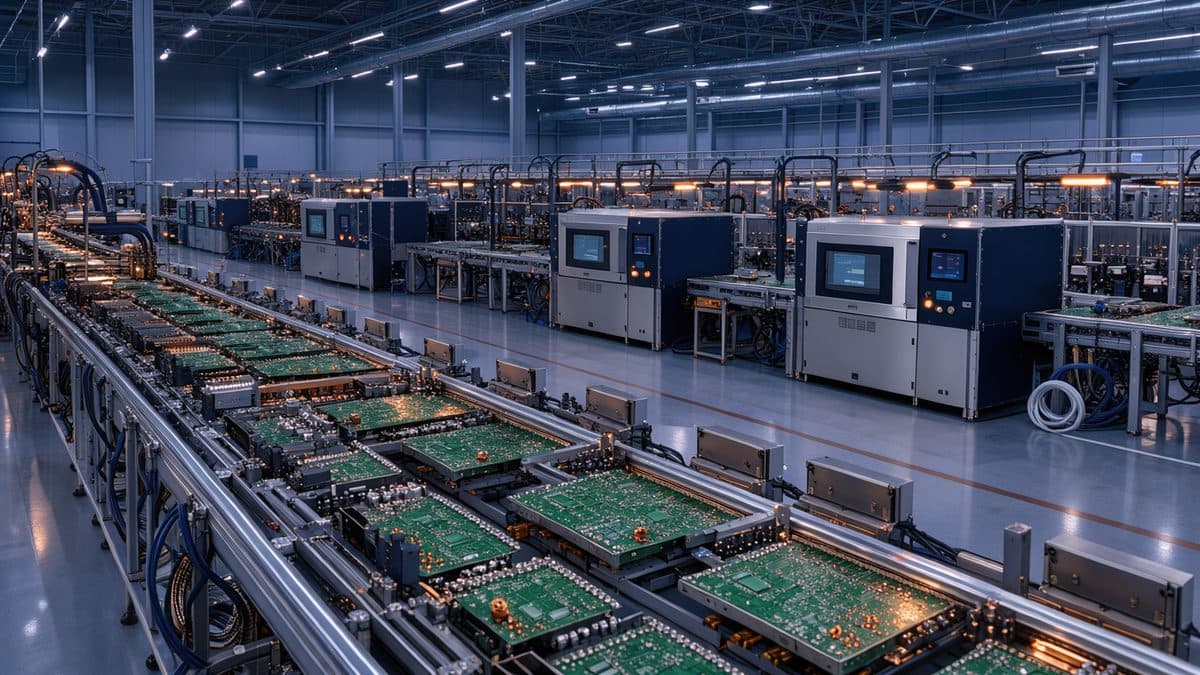
Malaysia has a long electronics manufacturing history, and Kuala Lumpur sits in a useful place for teams that need both responsiveness and access to the Asian component market. But “made in Malaysia” is not a quality claim on its own. The process, the people and the documentation are what matter.
One facility, one workflow
Silvtronics has been building boards since 2003, with its head office and manufacturing in Kuala Lumpur, Malaysia. For a customer, the practical value is continuity: the prototype is reviewed, built and checked by the same team that will handle the production run.
That matters most at the hand-off between prototype and production. Many teams start with a quick-turn shop and then re-qualify a volume supplier. Keeping both under one roof removes a second first-article cycle and avoids re-learning the same design twice.
Why location affects a prototype
A prototype is a sequence of small decisions: a footprint check, a substitute part, a polarity question. Time-zone overlap shortens that loop. A Kuala Lumpur team working with customers across Asia, Australia and Europe can usually get a same-day answer without a night shift.
Freight matters too, but it is rarely the deciding cost on a 10-board build. The deciding cost is usually the week lost to an unanswered question.
What to look for in a Malaysian PCB assembler
Ask for specifics, not adjectives:
- Certification scope — ISO 9001 and TS 16949 are useful only if the processes you need are inside the scope. Ask which standards apply to fabrication and assembly (IPC-A-600 and IPC-A-610 in our case).
- Package capability — 0201, fine pitch, QFN/DFN, BGA, double-sided. A supplier that outsources the difficult board is a broker, not an assembler.
- File review — who checks the BOM against the placement data, and do they tell you before the build when something does not match?
- Sourcing model — kitted, turnkey or mixed, and how substitutions are approved.
- Test — what is included, what costs extra, and who writes the functional test procedure.
- Traceability — can they show which revision was built and which parts were fitted?
Kuala Lumpur and the component supply chain
Kuala Lumpur is not a component-distribution island. Distributors, freight and regional supply lines connect the city to the wider Asian market, and a manufacturer here can plan component sourcing around real lead times. What matters is whether the same team can take the job from prototype to production, or whether the component plan changes hands halfway through.
The honest version: location helps most when the engineering review and the production line are close enough to solve problems together. A prototype with a hard deadline benefits from local engineering attention; a production run benefits from planning that starts before the first reorder.
Documentation beats distance
A well-documented build travels better than a poorly documented one. Gerbers with a clear revision, a BOM with exact MPNs, an assembly drawing with polarity and a defined test plan reduce the need for a physical visit.
This is also the best defence against the classic manufacturing failure: a substitution or a revision change that nobody recorded. If the paperwork is clear, distance is manageable. If it is not, a factory next door will still build the wrong board.
A practical next step
If you are comparing Malaysian suppliers, send the same package to each and compare the questions they ask. The supplier that spots the missing paste layer or the ambiguous BOM line is the one paying attention.
Our assembly calculator gives an indicative price without an account, and the Malaysia assembly page explains the local workflow. If you want a file review first, email sales@silvtronics.com with the package and the target date.
Keep reading
All articles Quoting
How to get an accurate PCB assembly quote, first time
A quotation is only as good as the package behind it. Here is the information that changes the number, and the details that quietly delay a first article.
Read article Lead time
10-day vs 15-day PCB assembly: where the time actually goes
Lead time is not one machine running faster. It is file review, procurement, stencils, programming, queue and test. Knowing the sequence is how you protect a deadline.
Read article Sourcing
Kitted, turnkey or mixed: choosing a PCB assembly sourcing model
Who buys the components changes the risk, the paperwork and the lead time. Here is how to choose without optimising for the wrong number.
Read article