
Kitted, turnkey or mixed: choosing a PCB assembly sourcing model
The practical difference between consigned, turnkey and mixed PCB assembly, including attrition, part packaging and which model suits a prototype.
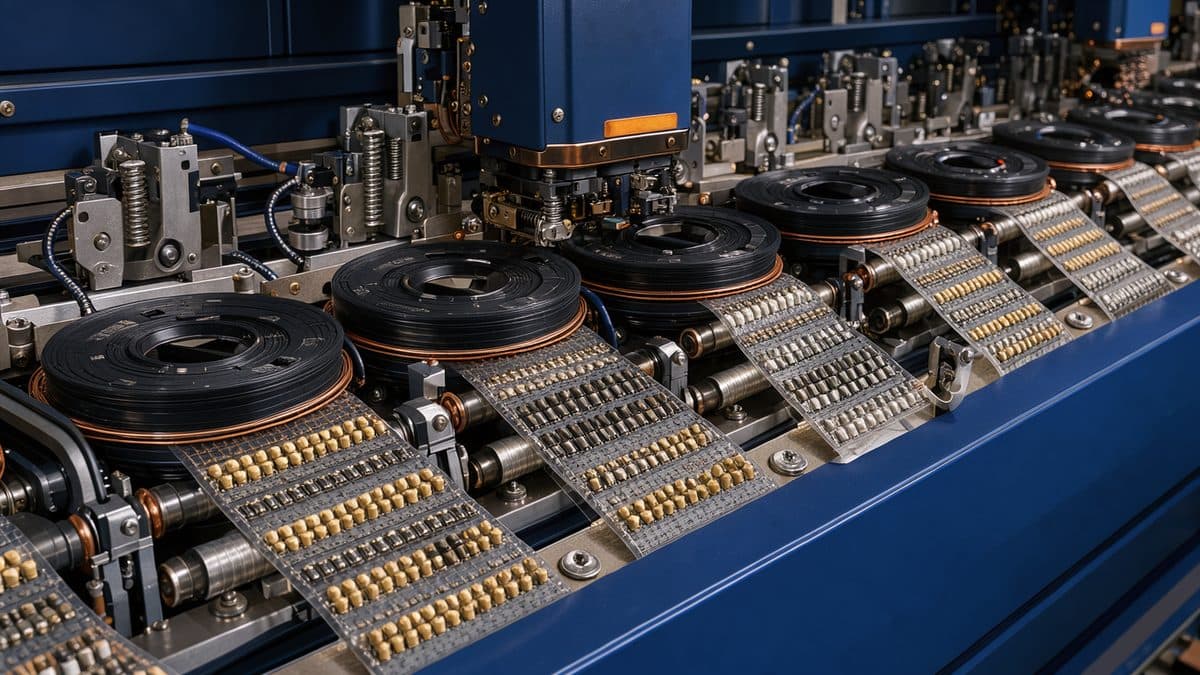
There are three common ways to get components onto a board, and the cheapest-looking option is not always the cheapest job.
Kitted (consigned) assembly
You buy the components and ship them to the assembly house. The quote covers setup and placement, not the parts.
What works well: you already have stock, you have a preferred distributor, the parts are expensive or export-controlled, or the design uses a part you have already qualified.
What to plan for:
- Send 3% extra parts for attrition. Reels and tubes are not always perfect, and a dropped 0201 is not recoverable.
- Package parts in cut tape, reel or tube. Loose parts need protection and take longer to load.
- Label every bag and reel with the MPN and quantity. A mismatched label is a line stop.
- Accept that a shortage discovered mid-build pauses the job. The assembly house cannot substitute a part it did not buy.
Kitting gives you control and can remove component margin, but it moves procurement risk and logistics onto your team.
Turnkey assembly
Send the BOM and Gerbers; we source the components against the approved BOM and build the boards.
What works well: prototypes where you do not want to open accounts with five distributors, builds with many small passives, and teams without a procurement function.
What to plan for:
- Component cost is quoted separately after BOM review. The assembly calculator deliberately excludes it.
- Substitutions need approval. If a part is unavailable, an alternative should be proposed with the datasheet and a clear note, not quietly fitted.
- Long-lead parts can dominate the schedule even when the assembly line is free. Ask for the lead-time exceptions before approving.
- A turnkey quote should show what is being sourced, not just a single bundled number. You need to know what you are paying for.
Mixed sourcing
You supply the parts that are expensive, already stocked, or sensitive, and we source the rest. This is common on pilot builds where one RF module or connector is the long pole and the passives are commodity items.
Mixed projects need a clean split in the BOM. Add a column or a note that says “customer supplied” per line. If the split only exists in an email, it will eventually be assembled wrong.
A quick comparison
| Decision | Kitted | Turnkey | Mixed |
|---|---|---|---|
| Who buys parts | You | Silvtronics | Split |
| Component cost in quote | No | Yes, after BOM review | Split |
| Procurement risk | You | Us | Shared |
| Best for | Stock, qualified or sensitive parts | New prototypes, many line items | One long-lead or costly part |
| Main failure mode | Shortage or mislabelled parts | Unapproved substitution | Unclear BOM split |
How to state it on the quote
Use the sourcing selector on the assembly quote form and add a one-line note:
- “Kitted — all parts shipped, 3% spares included.”
- “Turnkey — no substitutes without approval.”
- “Mixed — U1 and J1 customer supplied, everything else source.”
That single sentence prevents most sourcing questions during review.
The cost question
Kitted assembly can look cheaper because the component line disappears from the quote. It has not disappeared; it moved to your purchase order, your freight and your time. Turnkey adds procurement work that has to be paid for, but it also gives you one throat to choke when a reel is short.
For a first prototype, turnkey is usually the faster path to a working board. For a production reorder where you already hold qualified stock, kitting can make sense. The right answer depends on which risk you would rather carry — not on which quote has the smallest subtotal.
If you are unsure, send both versions of the BOM split and ask for a comparison. A useful assembly partner will tell you where the model stops making sense.
Keep reading
All articles Quoting
How to get an accurate PCB assembly quote, first time
A quotation is only as good as the package behind it. Here is the information that changes the number, and the details that quietly delay a first article.
Read article Pricing
What actually drives PCB assembly cost (and what does not)
Two boards with the same area can quote very differently. The reasons are visible in the data if you know which inputs the pricing engine is reading.
Read article Capabilities
SMT, through-hole, fine pitch and BGA: how complexity changes assembly
The board does not know it is a prototype. Every package on it adds a process requirement, and those requirements are what the quote is really pricing.
Read article